

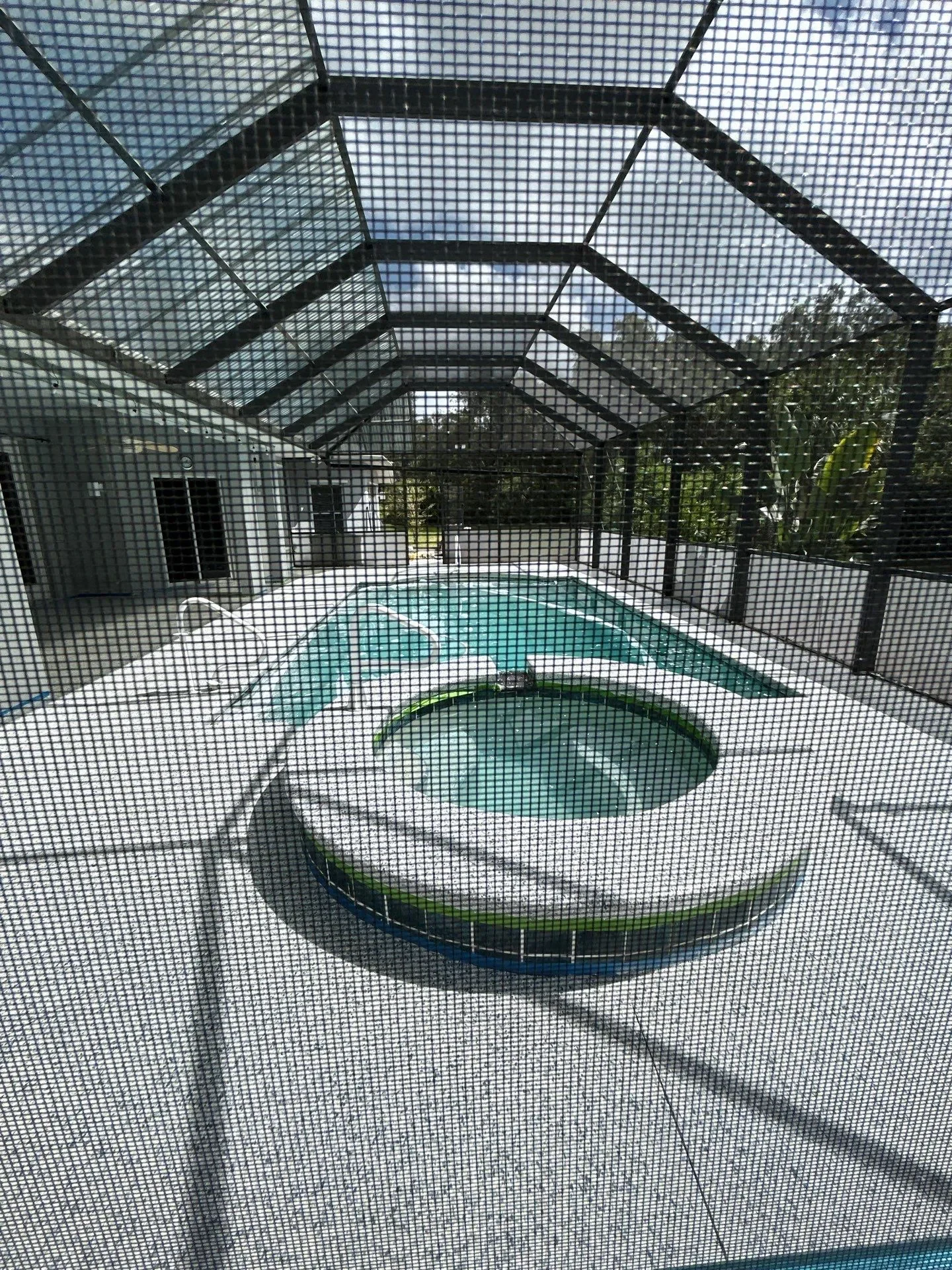
Regular pool screen enclosure maintenance helps Florida homeowners spot small problems before they lead to larger repairs. A simple routine includes checking screens for tears, looking for corrosion or loose connections, cleaning mesh with mild soap and a soft brush, clearing nearby vegetation, and checking doors and hardware. More complex problems, especially those involving elevated roof panels or structural components, should be assessed by a professional.
Florida's heat, humidity, rainfall, salt air, and storms create ongoing maintenance demands for outdoor structures. Although aluminum framing and screen mesh are designed for outdoor use, neither is immune to damage, dirt, or gradual wear.
Use this checklist to keep your enclosure cleaner, identify concerns early, and understand when professional help is appropriate.
Monthly Pool Cage Maintenance Checklist
A brief monthly inspection can help you identify obvious problems without climbing on the structure or handling damaged components.
Check the Screens
Walk around the enclosure and look for:
Tears, holes, or punctures in the mesh.
Panels that appear loose, sagging, or pulled out of their channels.
Accumulated leaves, pollen, or debris.
Damage near doors and other frequently used areas.
New openings that could allow insects to enter.
Small holes may be repairable, but recurring tears or widespread brittleness can indicate that larger sections need replacement.
Inspect the Frame From Ground Level
Look for visible bending, unusual movement, loose-looking components, or deterioration around accessible connections.
Pay attention to changes after strong winds or heavy rain. If a framing member appears damaged or a roof section looks displaced, keep clear of the affected area and arrange a professional inspection.
Never climb onto the screen enclosure to inspect the roof.
Test Doors and Latches
Open and close each enclosure door carefully. Check whether it swings freely, closes properly, and latches as intended.
A door that drags, sticks, or fails to close can damage nearby mesh or create an opening for insects. Avoid forcing it if the frame appears misaligned.
Remove Debris Around the Base
Clear leaves, branches, and other loose material from accessible areas around the enclosure. Debris can trap moisture, obstruct drainage, or hide damage at the base.
Use appropriate tools and avoid disturbing structural connections or attempting repairs to the anchoring system.
Seasonal Pool Cage Maintenance Checklist
Florida homeowners should adjust their maintenance routine to local conditions. Properties near the coast, beneath mature trees, or in areas exposed to frequent storms may need closer monitoring.
Before Hurricane Season
Prepare the enclosure before storm activity increases.
Inspect accessible screens for tears and loose edges.
Look for visible corrosion or deterioration.
Check doors, hinges, and latches.
Clear branches that could contact the enclosure.
Ensure nearby drainage paths are not obstructed.
Photograph existing damage for your maintenance records.
Arrange professional evaluation of any suspected structural issues.
Do not assume that replacing damaged screens makes a pool cage hurricane-proof. Follow official weather guidance and any instructions provided by your qualified contractor.
After Major Storms
Once conditions are safe, inspect the enclosure from the ground.
Look for missing panels, bent framing, fallen branches, loose debris, or changes in the alignment of the structure. Do not touch downed electrical equipment or approach an enclosure that appears unstable.
If structural damage is suspected, keep people away from the affected area and contact a qualified professional. Avoid reinstalling panels or making temporary structural repairs without appropriate guidance.
During Heavy Pollen or Leaf Seasons
Pollen and organic debris can accumulate on screen mesh and framing. More frequent gentle rinsing may help prevent buildup.
Remove accessible leaves and branches without pulling on the mesh. If debris has collected on elevated roof panels, arrange safe professional cleaning rather than climbing the enclosure.
Annual Professional Pool Enclosure Inspection
Routine homeowner checks are useful, but they cannot replace a professional assessment when structural problems may be present.
A professional inspection can focus on the condition of the frame, connections, anchoring, screen channels, doors, and other relevant components.
What Should Be Evaluated?
Frame condition: Look for visible corrosion, deterioration, bending, and other signs that may affect the enclosure's condition.
Connections and fasteners: Check accessible joints and attachment points for signs of loosening or damage.
Screen panels: Identify tears, stretched mesh, failed spline, and recurring areas of damage.
Doors and hardware: Assess operation, alignment, hinges, latches, and other components that affect daily use.
Drainage and surrounding conditions: Identify debris buildup, vegetation contact, or water-related issues around accessible parts of the structure.
The scope of the inspection should reflect the enclosure's age, location, history, and any concerns identified by the homeowner. An inspection does not automatically constitute an engineering assessment.
How to Clean Pool Screens and Frames Safely
Gentle cleaning removes common outdoor buildup without subjecting the mesh to unnecessary force.
Step 1: Remove Loose Debris
Start by removing accessible leaves and loose material with a soft brush. Work gently and avoid pushing against the mesh.
Do not use a ladder against the screen panels or climb onto the structure.
Step 2: Prepare Mild Soapy Water
Mix a small amount of mild soap with water according to the cleaner's directions. Avoid harsh chemicals, abrasive products, and solvents unless the screen or frame manufacturer specifically approves them.
If you're unsure whether a product is suitable, test it on a small, inconspicuous area first.
Step 3: Brush Gently
Use a soft-bristled brush or nonabrasive sponge to loosen dirt from accessible screen and frame surfaces. Avoid aggressive scrubbing, which can stretch mesh or damage weakened areas.
Do not press hard against older or brittle screens.
Step 4: Rinse With Gentle Water Pressure
Rinse away the soap and loosened dirt using a garden hose or another gentle water source.
Avoid directing a high-pressure jet at the mesh, spline, joints, or fasteners. Excessive pressure can stretch, loosen, or damage components.
Step 5: Inspect the Cleaned Area
Once the area is clean, look for holes, loose edges, deteriorated mesh, and visible frame problems. Cleaning may make existing damage easier to identify.
If you discover structural concerns, stop and arrange a professional assessment.
Landscaping and Debris Control
Plants can make a pool area attractive, but vegetation that touches the enclosure can create maintenance problems.
Keep branches from rubbing against the mesh and trim plants that frequently drop debris onto the roof or panels. Choose landscaping that allows reasonable access around the structure without damaging its foundation or interfering with drainage.
Also pay attention to standing water and clogged drainage areas. Removing unnecessary sources of standing water can help reduce mosquito breeding around the property.
Do not cut large branches near the enclosure unless you can do so safely. Hire an appropriately qualified professional for work that involves heights, heavy limbs, or potential damage to the structure.
Pool Cage Doors, Hinges, and Hardware
Doors receive repeated use and may need attention before other parts of the enclosure.
Check hinges for visible damage, verify that latches work, and make sure doors close without catching the mesh. Keep tracks or nearby areas clear of dirt and debris.
If hardware requires lubrication, follow the manufacturer's recommendations. Avoid applying products that may stain or damage the mesh.
A misaligned door may need adjustment, but persistent alignment problems can also indicate a frame or connection issue. Have recurring problems assessed rather than repeatedly forcing the door into position.
When Should You Call a Pool Screen Professional?
Arrange professional assistance if you notice:
Multiple torn or brittle screen panels.
Screens repeatedly pulling out of their channels.
Visible corrosion or deterioration around connections.
Bent or displaced framing.
Loose-looking attachment points.
A door that remains misaligned after basic cleaning.
Storm damage or a roof panel that appears unstable.
Damage that cannot be safely reached from ground level.
Screen repairs and structural repairs are different types of work. A contractor should identify whether the issue is limited to the mesh or involves the frame and supporting components.
For larger repairs or replacement projects, explore Courtesy Screening's screen enclosure services.
Book an Annual Pool Enclosure Inspection
A simple maintenance routine helps you monitor your enclosure, but professional evaluation is important when damage involves the frame, connections, or hard-to-reach areas. Contact Courtesy Screening to discuss your pool screen enclosure inspection and maintenance needs.
Regular attention to screens, hardware, landscaping, and visible structural conditions can help you maintain a cleaner outdoor space and identify repairs before they become more extensive.
Frequently Asked Questions
Can I pressure wash my pool screens?
High-pressure washing can damage mesh, loosen screen edges, and affect components. Gentle rinsing with a garden hose and cleaning with mild soap and a soft brush are safer routine methods. If professional equipment is needed, ask the contractor to use a method suitable for your specific enclosure. Ask what pressure and technique they use before the work starts.
How often should I clean my pool screen enclosure?
A monthly visual check is a useful starting point, while actual cleaning frequency depends on pollen, dust, leaves, salt air, and other environmental conditions. Some properties need more frequent rinsing, especially during periods of heavy debris or coastal residue. Note when buildup returns after a cleaning, and use that to set a routine that fits your property.
What cleaner is safe for pool screens?
Mild soap diluted in water is a practical starting point for ordinary dirt. Avoid abrasive cleaners, harsh chemicals, and solvents unless the manufacturer confirms they are suitable for the screen and frame materials. Test any product on a small, inconspicuous area first, and rinse thoroughly afterward.
Should I inspect the roof screens myself?
No. Do not climb onto the enclosure or attempt to reach high roof panels using an unstable ladder. Inspect from the ground and hire a qualified professional for elevated areas. Binoculars or a zoomed phone photo can help you spot sagging, tears, or loose edges from below.
How do I get rid of mildew or green buildup on pool cage screens?
Start with the gentlest method: a soft brush, mild soapy water, and a thorough rinse. Heavy or recurring growth may call for a cleaner made for screens, so check that it is safe for your mesh and frame before using it. If buildup keeps coming back, ask a professional about the cause, such as shade, moisture, or overhanging trees.
Can cleaning damage my screens or frame?
It can if the method is too aggressive. Hard scrubbing, high pressure, and strong chemicals can stretch mesh, loosen spline, and wear coatings on the frame. Gentle, consistent cleaning is easier on the enclosure than occasional heavy cleaning. If a screen looks stretched or a spline has loosened afterward, have a professional check it.
