

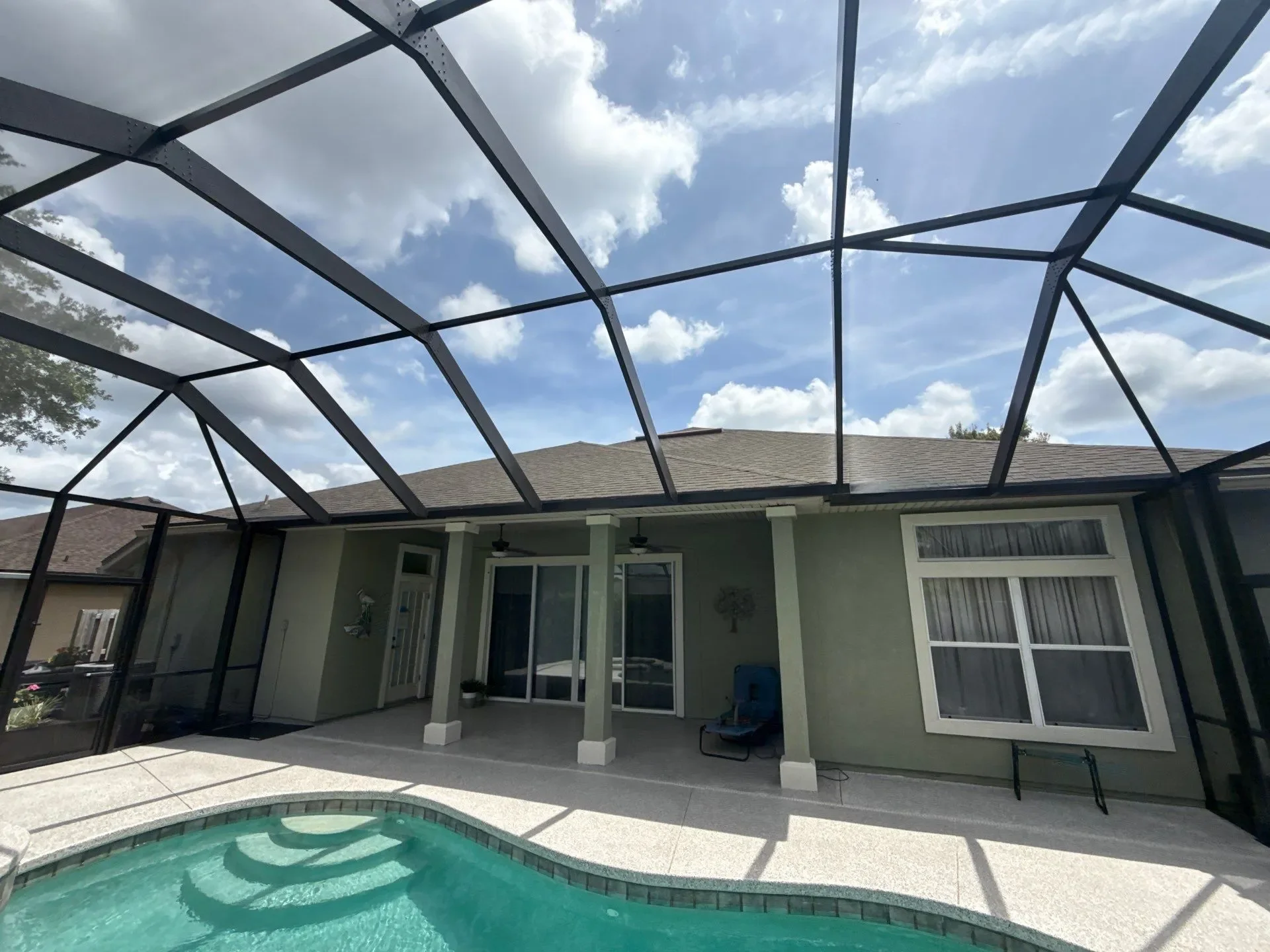
Most Florida homeowners should plan to inspect their pool cage screens regularly and consider rescreening when the mesh becomes brittle, develops recurring tears, or no longer performs as intended. A useful planning range is approximately 7–15 years for screen mesh, although actual lifespan varies by material, installation, weather exposure, maintenance, and the condition of the enclosure. This is a general industry reference, not a guaranteed lifespan for every screen or a verified Courtesy Screening service interval.
Florida's intense sunlight, humidity, storms, salt air, and everyday outdoor use can affect screen mesh differently from one property to another. Rather than replacing screens according to age alone, homeowners should combine a sensible maintenance schedule with regular visual checks.
What Determines How Often You Need Pool Screen Replacement?
Two pool cages installed around the same time may need rescreening at different intervals. Their materials, locations, maintenance routines, and exposure to damage all influence how quickly the mesh wears out.
1. Sun Exposure and Florida Heat
Ultraviolet radiation can gradually weaken certain screen materials. Over time, mesh may become brittle, lose flexibility, or tear more easily when touched or exposed to wind-blown debris.
A pool cage that receives direct sunlight throughout the day may experience different wear from one shaded by trees or nearby buildings. Sun exposure isn't the only factor, but it is an important consideration when estimating screen life.
2. Coastal Salt Air Versus Inland Conditions
Coastal properties can experience salt deposits and increased corrosion risk for susceptible metal components, including fasteners and connections. The mesh itself may also collect residue that needs periodic cleaning.
Inland homes may experience more exposure to pollen, leaves, branches, or other debris depending on their surroundings. Neither location automatically determines when rescreening is needed; the actual condition of the screen and frame should guide the decision.
3. Trees, Storms, and Falling Debris
Branches, palm fronds, and wind-blown objects can puncture or stretch screens. A single damaged panel may need immediate attention even when the rest of the enclosure is relatively new.
After severe weather, inspect the enclosure from the ground for tears, loose panels, bent framing, and displaced connections. Avoid climbing onto the cage or attempting to inspect elevated roof panels yourself.
4. Pets and Everyday Use
Dogs and cats can scratch, push against, or claw standard screen mesh. Repeated contact around doors and lower panels can cause damage earlier than expected.
If pets frequently use the pool area, a more durable screen material in vulnerable sections may be worth considering. Choosing an appropriate mesh can reduce certain types of damage, but no screen is completely resistant to punctures or wear.
5. Screen Type and Installation Quality
Different screen materials offer different balances of durability, visibility, airflow, and insect protection. Installation also matters: poorly secured mesh, damaged spline, or problems with the screen channels can contribute to premature failure.
Ask your contractor which screen options are suitable for your enclosure and intended use. The best choice is the one that meets your needs without creating unnecessary trade-offs.
How Long Do Different Pool Screen Types Last?
There is no single lifespan that applies to every mesh product. The following comparison covers common screen categories, but it should not be treated as a product-specific warranty or guaranteed service life.
Standard screen: The main benefit is general insect and debris protection. The main trade-off is that it may be vulnerable to pets and physical damage. What to consider: it’s suitable for ordinary residential use.
Heavy-duty screen: The main benefit is greater resistance to certain forms of wear, depending on the product. The main trade-off is that it may cost more and have different visibility or airflow. What to consider: confirm the actual material specifications.
Pet-resistant screen: The main benefit is improved resistance to pet contact, since it’s designed for that purpose. The main trade-off is that it’s not pet-proof, and the mesh can still be damaged. What to consider: consider lower panels and doors.
No-see-um screen: The main benefit is that the finer mesh helps block very small biting insects. The main trade-off is that it can reduce airflow and visibility compared with coarser mesh. What to consider: it’s useful where biting midges are a concern.
Specialty or premium screen: The main benefit is that it may prioritize specific durability or performance characteristics. The main trade-off is that features vary by manufacturer. What to consider: compare product data and warranty terms.
Signs It Is Time to Rescreen Your Pool Cage
Your pool cage doesn't have to be completely damaged before rescreening becomes worthwhile. Watch for these common warning signs.
Tears and holes: Small holes can allow mosquitoes and other insects into the enclosure. Several damaged panels may indicate that the mesh is reaching the end of its useful life.
Brittle or weakened mesh: If the material tears easily during ordinary handling or has become noticeably fragile, additional patches may not provide a lasting solution.
Loose or sagging panels: Screen that has pulled away from its channels or lost its proper tension may need repair or replacement. The underlying cause should be checked before installing new mesh.
Repeated repairs: If new holes continue appearing in different areas, rescreening a larger section may be more practical than repeatedly repairing individual panels.
Widespread deterioration: When many panels show similar wear, a full rescreen may provide a more consistent appearance and reduce the need for repeated visits.
Normal Fading Versus Structural Problems
Fading alone doesn't necessarily mean that the mesh has failed. Screen material can change appearance after prolonged exposure while remaining functional.
Structural problems are different. Bent framing, loose connections, substantial corrosion, or movement at attachment points may require professional evaluation. New mesh will not fix a compromised frame.
If you notice both deteriorated screens and potential frame damage, ask for an inspection before authorizing a full rescreen.
When Is the Best Time to Rescreen a Pool Cage in Florida?
Rescreening can be scheduled throughout the year, but the most suitable timing depends on local weather, contractor availability, and the condition of your enclosure.
Before Hurricane Season
Florida's Atlantic hurricane season officially runs from June 1 through November 30. Scheduling maintenance before the season becomes active gives you an opportunity to identify damaged mesh, loose components, or other concerns in advance.
However, replacing screens does not make an enclosure hurricane-proof. Follow official storm guidance and ask a qualified contractor about the condition of your structure.
During Drier or Less Disruptive Weather
Dry, settled weather can make scheduling outdoor work easier, although conditions vary by region. Rain, strong winds, heat, and storm activity may affect working conditions and project schedules.
When Damage First Appears
Don't wait for a particular season if a screen has a significant tear or has pulled away from its channel. Prompt attention can help prevent additional damage and reduce pest entry.
What Does Pool Screen Rescreening Include?
The scope depends on whether you need a single panel replaced or the entire enclosure rescreened.
A typical project may involve removing damaged mesh, inspecting screen channels, replacing worn spline where necessary, installing the selected mesh, and checking the finished panels.
The contractor should also examine the frame for visible damage that could affect the work. If structural concerns are found, they should be addressed separately rather than hidden by the new screens.
The duration depends on the size and height of the enclosure, accessibility, material selection, weather, and repair requirements. Request a project-specific estimate instead of assuming that every pool cage can be completed in the same amount of time.
For service information, visit Courtesy Screening's screen enclosure page.
How to Extend the Time Between Rescreens
A few simple habits can help you identify problems early and avoid unnecessary damage.
Rinse screens periodically to remove pollen, dust, and other buildup.
Clean with mild soap and a soft brush rather than aggressive scrubbing.
Trim branches that rub against the enclosure or frequently drop debris onto it.
Keep pets from scratching or pushing against vulnerable panels.
Check doors, hinges, and latches so they operate without catching the mesh.
Inspect the enclosure after major storms.
Arrange professional assessment if you notice corrosion, loose framing, or recurring screen failures.
Maintenance cannot eliminate normal wear, but it can help you distinguish minor upkeep from damage that needs professional attention.
Request a Pool Screen Rescreening Quote
If your pool cage has torn panels, brittle mesh, or repeated screen damage, an assessment can help you decide whether to replace individual panels or rescreen the enclosure.
Request a rescreening quote from Courtesy Screening.
The goal is to select a screen solution that fits your property's conditions, your household's needs, and the existing enclosure's condition.
Frequently Asked Questions
Can I rescreen just one pool cage panel?
Yes. Individual panel replacement may be appropriate when the remaining mesh is in good condition and the frame is sound. If several panels are deteriorating or the material has become brittle throughout the enclosure, a full rescreen may be more practical. Ask for both options when comparing estimates, so you can see the price difference for yourself.
Is the pet screen stronger than the standard screen?
Pet-resistant mesh is designed to offer greater resistance to certain types of scratching and contact. Its actual performance depends on the product, and it is not indestructible. It may also differ from standard mesh in visibility, airflow, and cost. If you have dogs or cats that use the enclosure, ask your contractor to show you samples so you can compare how each one looks and feels.
Does the season matter when rescreening a screen enclosure?
Work can be scheduled throughout the year, but weather and contractor availability may affect the timeline. Planning before periods of frequent storms can be useful, while damaged screens should be addressed when needed rather than waiting for a preferred season. If you’re aiming for a specific window, request a schedule early and ask how weather delays are handled.
Should I rescreen if the frame is corroded?
Not without assessing the corrosion first. If the damage affects structural members, fasteners, or connections, the frame may need repair or further evaluation before new mesh is installed. Ask your contractor to inspect the frame before quoting the rescreen, so you don’t pay for a new screen on a frame that needs work.
Can I switch to a different screen type when rescreening?
Usually, yes. Rescreening is a good time to change from standard to tighter mesh, pet-resistant, or sun-control screen. Because mesh type can affect airflow, visibility, and wind load, tell your contractor before the quote so the choice is confirmed against your enclosure’s design.
How long will the new screen last?
It varies with sun exposure, mesh type, nearby trees, and how well the enclosure is maintained. Screens in sunny, exposed yards typically wear faster than shaded ones. Ask your contractor what to expect for the screen you choose and whether any warranty applies to the material or the installation.
