

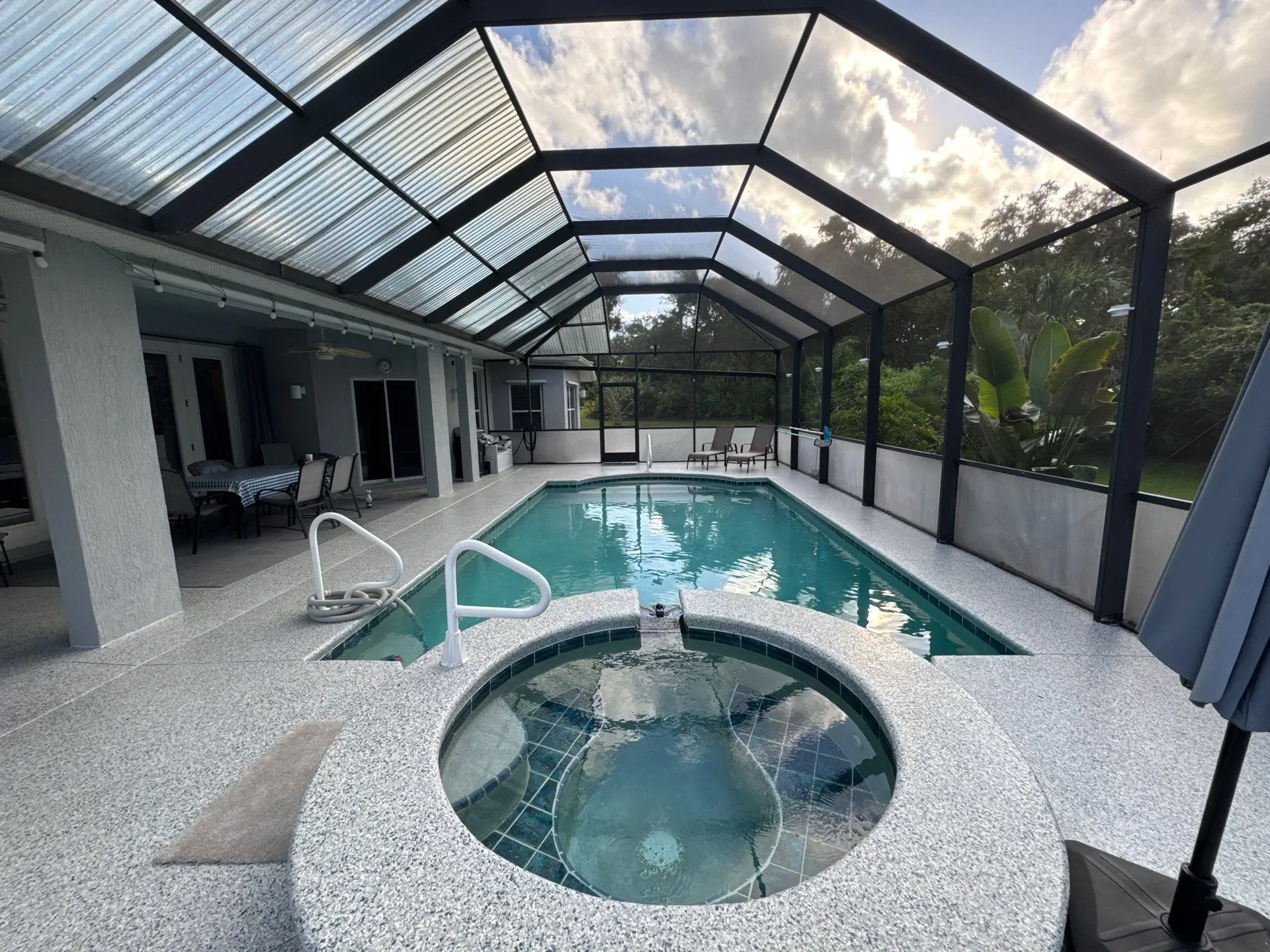
Most Florida homeowners should budget roughly $12,000 to $30,000 for a new pool screen enclosure, with small, simple cages at the lower end and large or custom designs reaching $45,000 or more. Price depends mainly on size, roof style, screen type, and permit and engineering requirements, so a site-specific quote is the only reliable number.
Ask three contractors what a pool cage costs and you may hear three very different numbers. That doesn’t always mean someone is padding the bid. A pool cage, the aluminum-framed screened structure that covers a Florida pool and deck (also called a pool screen enclosure), is engineered for your lot, your pool and your county’s wind requirements, so no two are priced alike.
At Courtesy Screening, we design and build pool and patio screen enclosures, and the first question almost every homeowner asks is what the project will cost. This guide covers what a typical price includes, which choices move it most, and how to read quotes that land thousands of dollars apart. The ranges below are general Florida market estimates to help you budget before you call anyone. They aren’t a quote, and we’ve kept them wide because real projects vary a lot.
What does a pool screen enclosure include?
A finished enclosure is more than screen on a frame. A complete price usually covers these parts:
Frame: aluminum posts, beams and supports. Standard designs use posts at regular intervals, while premium “picture window” styles use fewer posts for a clearer view.
Screen: standard fiberglass mesh is the common baseline. Upgraded options include stronger meshes, pet-resistant screen and higher-visibility screen.
Doors and gates: at least one access door, plus any extra doors to the house, patio or yard.
Roof style: mansard, gable or dome screen roofs are the usual choices.
Engineering: signed and sealed drawings showing the structure meets Florida wind-load requirements. Our enclosures are built to hurricane-rated 140 MPH construction standards, and the exact engineering for your home depends on your location and permit.
Permit and inspections: the building permit, plus the inspections required before the project is closed out.
What affects the cost of a pool cage?
Size comes first, but it’s rarely the only reason prices diverge. These factors matter most:
Footprint and height. More area means more aluminum, more screen and more labor. Taller cages need heavier framing, and two-story designs sit in a higher price class altogether.
Roof style. A simple flat or low-slope screen roof costs less than a gable, dome or custom roofline with more cuts, joints and engineering. If you want a solid roof for all-season use instead of a screen roof, that’s a different product. Our Elite Rooms have solid roofs and are priced differently from a standard screen enclosure.
Screen and frame choices. Upgraded mesh, wider post spacing and heavier extrusions all add cost. They can also improve durability and views, so they’re trade-offs, not just upsells.
Doors and attachments. Every extra door, and any connection to the house roof or soffit, adds labor and detail work.
Wind zone and engineering. Coastal and high-wind areas can require stronger connections, closer post spacing or heavier members. Enclosures must be engineered to meet wind loads, and the specifics depend on your county.
Site conditions. Tight access, uneven decks, slab repairs and removing an old enclosure all affect labor time.
How much does a pool cage cost by size and style?
These figures are general Florida market estimates for a new aluminum-frame pool cage, as of October 2026. They are not Courtesy Screening’s quoted prices and shouldn’t be treated as a bid.
Compact, simple cages typically mean a small rectangular pool, a single-story design, standard fiberglass screen, a basic roof, and one door. The estimated total range is roughly $8,000 to $16,000.
Standard residential cages usually mean a mid-size pool and deck, standard height, a few doors, and a common roof style. The estimated total range is roughly $12,000 to $30,000.
Large or custom cages generally mean a larger footprint, taller or two-story sections, upgraded screen, fewer posts, and a custom roofline. The estimated total range is roughly $30,000 to $45,000 or more.
Ranges overlap on purpose. A well-designed standard cage can cost less than a poorly planned compact one if the compact one has complicated corners or tricky access.
Is pool cage pricing per square foot?
Some contractors talk in per-square-foot terms, but the total project is the number that matters. Market guides often put simple designs somewhere around $8 to $20 per square foot, with complex ones higher, and the rate shifts with roof style, height, screen grade and engineering. Treat it as a quick sanity check only. A tall, custom-roofed cage over a small pool can cost more per square foot than a basic one over a large deck. Compare the total scope, not the rate.
What’s included in a pool enclosure quote, and what costs extra?
Quotes aren’t standardized, so two bids that look similar can include different things. Before comparing totals, look for these line items.
Often included: engineered drawings, materials, installation labor, and a final inspection. Many contractors also handle the permit application.
Often listed separately or left out:
Removal and disposal of an old enclosure
Upgraded screen, extra doors or specialty hardware
A new or updated land survey if your jurisdiction requires one
Concrete or deck repair needed to anchor the frame
Lighting or electrical work
HOA application fees
If the deck around your pool needs repair or new pavers and patio work, that’s a separate scope from the enclosure, though the two can be planned together.
Permit and engineering costs. Permit fees vary by city and county, and engineered drawings are a separate cost that usually runs in the hundreds of dollars, depending on size and complexity. Ask whether both are built into the price or billed separately. Skipping the permit isn’t a savings: starting work without one can bring penalties and complications when you sell or file an insurance claim.
How long does HOA approval take?
If you’re in an HOA, plan for this before you sign anything. Florida’s HOA law doesn’t set a single statewide response deadline for architectural review, so the timeline usually comes from your community’s declaration and guidelines. Some communities commit to about 30 days, but don’t assume that applies to you. Request your association’s guidelines and submission calendar early, and don’t start work without written approval. Condo associations follow different rules.
How can you manage costs without cutting corners?
Some savings are real, and some create problems later. Start with the real ones:
Keep the design straightforward. A simple roofline and standard height cost less to engineer and build than complex shapes.
Fit the footprint to how you’ll use it. Enclosing only what you need reduces materials and labor.
Choose the screen deliberately. Standard fiberglass is fine for many homes. Spend on upgraded mesh only where it solves a problem you have, such as pets or a view you care about.
Prepare your HOA paperwork first. Redesigns after a rejection are expensive and slow.
Ask about financing. Spreading the cost over time can make a better design affordable. More on that in the FAQs below.
Combine projects when it makes sense. If you’re also planning a new fence or yard work, ask whether coordinating it with the enclosure saves mobilization costs. We also do fencing and yard design.
What not to trim: engineering, permits, inspections and wind-rated connections.
How do you compare pool enclosure quotes fairly?
When two quotes differ by thousands, the gap usually comes from scope, not just markup. Put the quotes side by side and check:
Dimensions and height: are both based on the same footprint?
Roof style and frame: same style, same post spacing, same extrusion size?
Screen: the type and grade, in writing.
Doors and hardware: how many, and what quality?
Engineering and permit: who pulls it, and is the cost included?
Exclusions: removal, repairs, HOA fees, survey.
Warranty and payment terms: what’s covered, for how long, and when payments are due.
License and insurance: ask for the license number and proof of insurance, and verify the license with the state. Courtesy Screening is licensed and insured.
If one quote is far lower, find out what’s missing before assuming it’s a bargain.
Get a price based on your actual pool
A range gets you started, but your lot, pool shape and HOA rules decide the real number. To see what a pool cage would cost for your home, request a free on-site estimate from Courtesy Screening, or call (386) 793-2815.
Frequently asked questions
How long does installation take?
Physical installation of a typical pool cage often takes several days to a couple of weeks once materials are ready. The steps before that, including engineering, permit review and any HOA approval, frequently take longer than the build itself.
Does the price include the permit?
It depends on the contractor and the quote. Some include permitting in the price and others list it separately, and permit fees differ by city and county. Ask for permit and engineering costs as separate line items so you know exactly what’s covered.
Can I finance a pool enclosure?
Yes. Courtesy Screening offers financing, advertised as low as 0%. Ask your estimator about current terms and eligibility, and compare the rate, term and fees against other options before you commit.
Does the cost change after hurricane season?
There’s no fixed seasonal price change we can point to, but demand can spike after major storms, which can stretch lead times and affect pricing. Ask how long a quote is valid and what happens if material costs change before your start date.
