

What Is a Screen Enclosure?
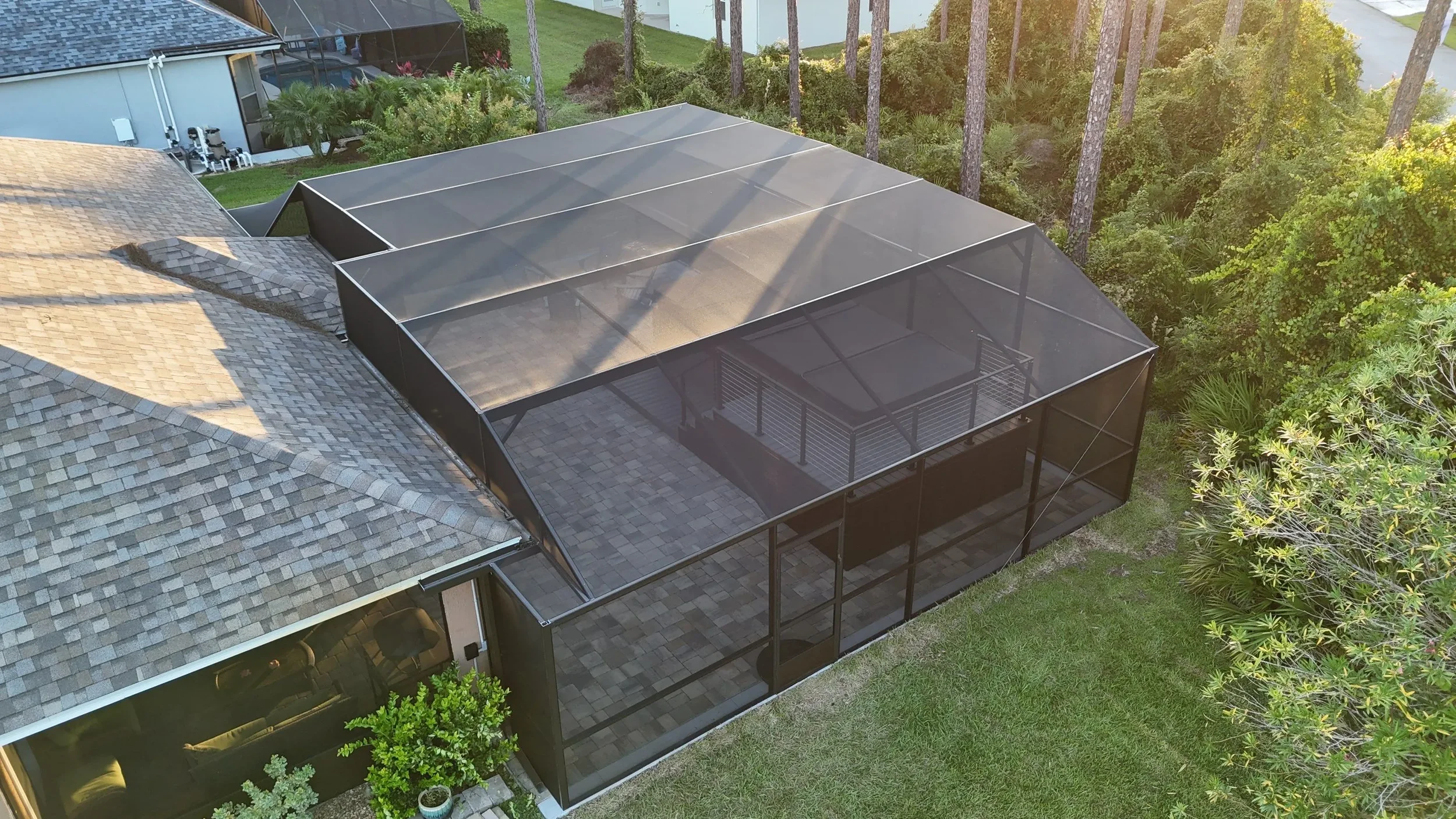
Anyone who has spent an evening on a Florida patio without one knows exactly why screen enclosures exist. One minute you're enjoying the sunset, the next you're swatting mosquitoes and brushing oak leaves off the table. If you're new to the idea, or you've simply always wondered what these structures actually are and whether one makes sense for your home, this guide covers the basics from the ground up.
What Is a Screen Enclosure?
A screen enclosure is a permanent, framed structure, typically built from aluminum, that covers an outdoor space with mesh screen panels instead of solid walls. It creates a bug free, debris free extension of your home while still letting in natural light and airflow.
In Florida, screen enclosures are everywhere for a simple reason: the climate practically demands them. Between mosquitoes, intense UV exposure, sudden rain showers, and wind blown leaves and pollen, an unscreened patio or pool area can be genuinely hard to enjoy for much of the year. A screen enclosure solves that problem while still keeping the outdoor feel intact.
Drive through almost any neighborhood in Palm Coast or Bunnell and you'll notice how common these structures have become. That's not a coincidence. Once homeowners experience how much more usable their patio or pool deck becomes with a screen enclosure, going without one again rarely feels like an option.
They also offer a layer of practical protection during storms, since well built enclosures are engineered to specific wind load requirements common throughout the state.
The Main Styles of Screen Enclosures
Not every screen enclosure looks or functions the same way. Here's a look at the three most common styles Florida homeowners choose from.
Pool Cage
A pool cage is probably the image most people picture when they hear "screen enclosure." It's a tall, often domed or gabled structure that covers an entire pool and surrounding patio area.
Pool cages keep leaves, bugs, and debris out of the water, which cuts down significantly on cleaning and chemical maintenance. They also add a layer of safety by creating a physical barrier around the pool.
Cost for a pool cage varies widely depending on size, height, and roof style, generally landing in the moderate to higher range compared to other enclosure types simply because of the scale involved.
Lanai or Patio Screen Room
A lanai, sometimes just called a screen room, is a smaller, more contained enclosure typically attached to the back of the house over a patio or porch. Unlike a pool cage, it doesn't need to stretch over a full pool area, so it's usually more compact and often less expensive.
This style is popular with homeowners who want a comfortable, bug free spot for morning coffee, dining, or relaxing without committing to enclosing an entire pool deck.
Solid Roof "Elite Room"
An elite room takes the concept further by replacing the screened roof with a solid, insulated roof panel while often keeping screened or even glass walls. This creates a space that stays more comfortable in heavy rain and offers more shade and temperature control than a fully screened roof.
Because of the added materials and construction involved, elite rooms typically sit at the higher end of the cost spectrum, but many homeowners find the added comfort and year round usability worth the investment, particularly if the space will function as a true outdoor living room.
How Screen Enclosures Are Built
Understanding the basic construction helps explain why enclosures vary so much in price and durability.
Aluminum framing: Most Florida screen enclosures use extruded aluminum framing because it resists rust and corrosion, holds up well in humidity, and doesn't require the maintenance wood or steel would demand. Frame thickness and design vary depending on the height and wind rating needed.
Screen mesh grades: Not all screens are the same. Standard fiberglass mesh keeps out common insects and debris, while heavier "super screen" or "pet screen" options offer more durability against pets, storms, or high traffic areas. Some homeowners near wooded lots also opt for finer mesh to block smaller insects like no see ums.
Roof types: Roofs can be fully screened for maximum airflow, or built with solid panels (as in an elite room) for more weather protection. Some enclosures use a hybrid approach, with a solid roof section over a seating or cooking area and screened sections elsewhere.
The Core Benefits of a Screen Enclosure
More usable outdoor space. A screened patio or pool area can be enjoyed comfortably far more often throughout the year, without bugs or debris cutting the time short.
Increased home value. A well built enclosure is often viewed as a genuine home improvement by appraisers and buyers alike, particularly around a pool.
Protection from pests, UV rays, and debris. Screen mesh cuts down on direct sun exposure while keeping leaves, pollen, and bugs out of your living space and pool.
Stronger resale appeal. In a market like Florida's, buyers often specifically look for homes with an existing enclosure, since it saves them the cost and hassle of adding one later.
Many homeowners tackle a screen enclosure alongside other backyard upgrades, like new fencing or a broader yard design refresh, so the whole outdoor space feels finished at once rather than piecemeal.
A Quick Note on Permitting
Screen enclosures in Florida generally require a building permit, since they're permanent structures tied to your home's footprint and often involve engineering requirements for wind load. If you're curious about how that process works locally, our detailed guide on screen enclosure permitting in Flagler County walks through exactly what's involved, who pulls the permit, and what to expect from the timeline.
What the Process Looks Like With Courtesy
Getting started is more straightforward than most homeowners expect. Typically, the process looks something like this:
Initial consultation. We walk your property, talk through your goals (privacy, pool coverage, an outdoor living space), and discuss which style fits best.
Design and estimate. You'll get a clear proposal outlining the style, materials, and cost before any work begins.
Permitting. As a licensed contractor, we handle the permitting process so you don't have to navigate it alone.
Installation. Your enclosure is built to code and to the wind rating required for your area.
Final walkthrough. We review the finished structure with you to make sure everything meets your expectations.
Ready to Enclose Your Outdoor Space?
Whether you're picturing a full pool cage, a cozy lanai, or a solid roof elite room, Courtesy can help you design and build a screen enclosure suited to your home and your budget. Explore our screen enclosure services or learn more about our elite room option to see which fits your vision. Ready to move forward? Book a free consultation and let's talk through your project.
Frequently Asked Questions
How long does a screen enclosure typically last?
A well built aluminum enclosure can last decades with basic upkeep, though the screen mesh itself may need replacement roughly every seven to fifteen years depending on exposure and mesh grade.
Can a screen enclosure withstand a hurricane?
Enclosures built to Florida's wind load codes are engineered to handle strong winds, though homeowners in hurricane prone areas often remove screen panels ahead of major storms to reduce pressure on the frame. Our hurricane season checklist covers this in more detail.
Do screen enclosures help with air conditioning costs?
Indirectly, yes. By providing shade over windows and outdoor living areas, an enclosure can reduce direct heat gain on the home, though it isn't a substitute for insulation or window upgrades.
What's the difference between a lanai and a pool cage?
A lanai typically covers a patio space attached to the home, while a pool cage extends over the full pool and surrounding deck. Some homes have both, connected as one continuous structure.
Is a screen enclosure a good investment for resale?
Generally, yes, particularly in Florida where buyers actively look for enclosed pool areas and outdoor living spaces as a selling point.
