

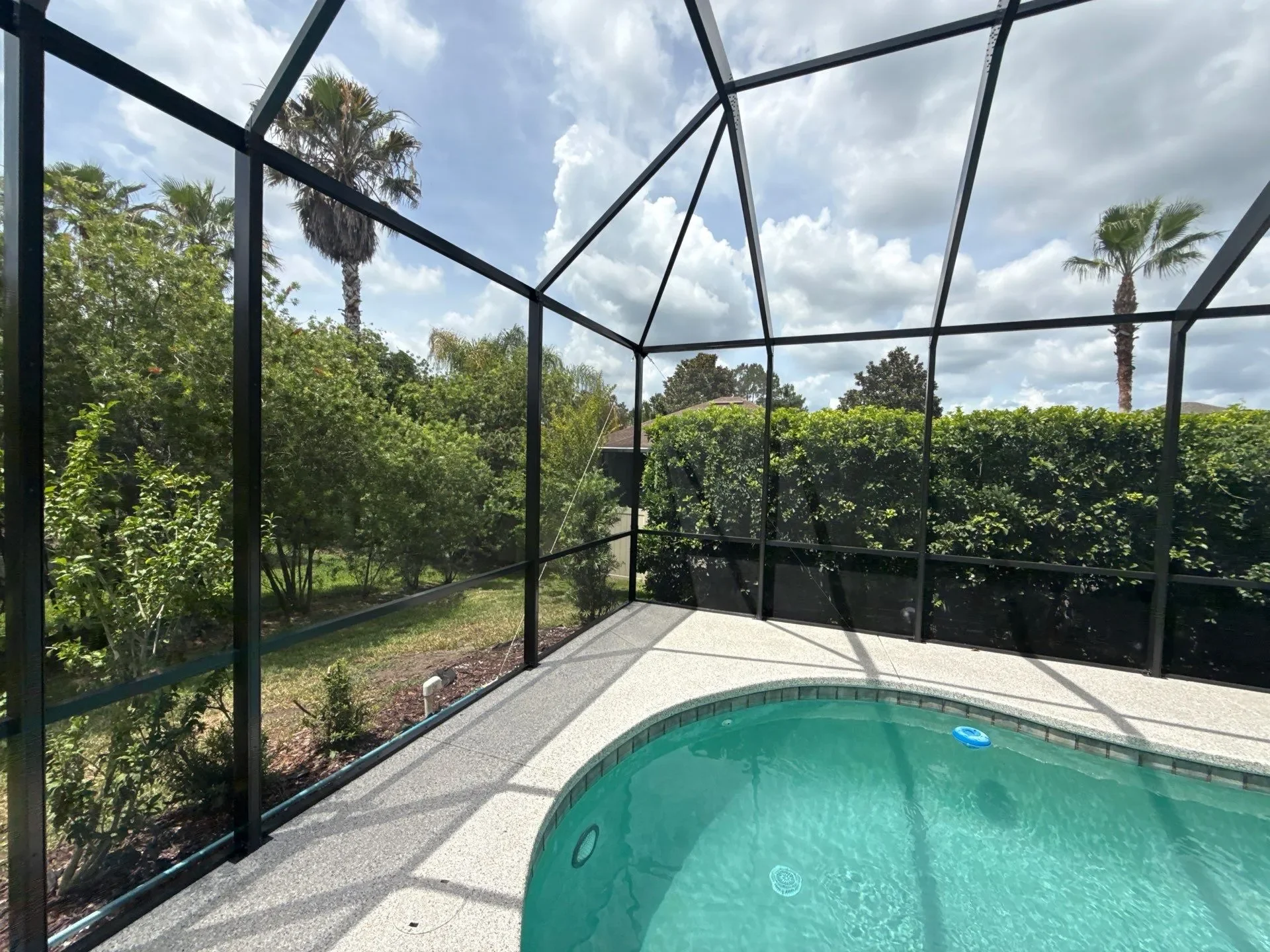
A hurricane-rated screen enclosure is one engineered to a specific design wind speed for its location, with a frame, connections, and anchoring documented in permitted drawings. "Rated" means designed to resist a stated level of wind. It doesn't mean immune to damage.
If you've seen "hurricane-rated" or "wind-rated pool cage" in ads, you've probably wondered what the words actually promise. This guide gives you a plain-English definition, explains how the wind speed is set, walks through the parts of the structure that matter, and ends with questions to ask any builder before you sign.
What a Wind Rating Means and How Design Wind Speed Is Set
A wind rating is shorthand for the design wind speed an engineer used when calculating the loads on the structure. The engineer takes that speed, applies the required formulas, and sizes the frame, connections, and foundation so they can carry the resulting forces.
The number isn't a guarantee, and it isn't a single statewide figure. Design wind speed depends on where the enclosure is built. Florida's building code sets wind speeds by location, and the number can differ between a coastal address and one farther inland. Other factors the engineer considers include how exposed the site is, how tall and large the enclosure is, and how it attaches to the house. Permit drawings for Florida screen enclosures typically cite the Florida Building Code's wind load provisions, including a section specific to aluminum screen enclosures, as shown in county-filed enclosure plans.
That's why you may see different numbers in different ads, such as "135 mph" in one and a higher number in another. A figure is only meaningful when you know the location it was engineered for and can see it on the drawings. A higher number isn't automatically better for your property, and a lower one isn't automatically unsafe. What matters is that the design meets the requirement for your address.
Your local building department decides what's required where you live. Ask it, or ask your builder to show you the design criteria on the permit drawings.
Frame, Gauge, Bracing, and Anchoring Details
Most Florida screen enclosures are aluminum, and the details of the frame are where much of the strength comes from.
Frame members. Posts, beams, and roof rafters come in different shapes and wall thicknesses. Gauge describes how thick the aluminum is. Thicker walls resist bending and buckling better, though the engineer's calculation, not gauge alone, determines what's adequate.
Spacing. The distance between posts and between rafters affects how much load each member carries. Closer spacing means less load per piece.
Bracing. Diagonal and knee bracing keep the structure from racking, or leaning sideways, under gusts. Poorly braced frames can distort even when the individual pieces are strong.
Roof style. Dome, mansard, gable, and flat-ish roof designs shed wind and rain differently, and each needs engineering suited to its shape.
Screen. The mesh also matters. Wind loads in the engineering are calculated for a specific screen, and substituting a different type later can change the picture. Plans often state the screen material the design assumes.
Anchoring. Anchors tie the frame to the slab or footing. They resist both uplift and sliding, which is why the condition of the concrete underneath is as important as the aluminum above it.
Fasteners, Connections, and the Foundation
Structures usually fail at their connections before the members themselves give way. A strong frame joined with too few, too small, or corroded fasteners isn't a strong frame.
Look for these in the engineered drawings:
Fastener type, size, and spacing for each connection
Corrosion-resistant materials, which matter especially near the coast
How the frame attaches to the house, including the wall condition it depends on
Anchor type, embedment depth, and spacing
Slab or footing details, particularly for new construction or an extension
The foundation deserves its own question. If the slab is cracked, undersized, or poorly supported, the anchors can't do their job no matter how well the frame is built. A good builder will check it before quoting.
Engineering Drawings, Permits, and Inspections
A rated enclosure should come with paperwork. Engineered drawings are sealed plans prepared by a licensed Florida engineer. They show the design criteria, member sizes, connection details, anchor layout, and the wind speed used. Florida's rules require signed and sealed site-specific engineering for enclosures designed under its screen-removal alternative method, as Rule 61G20-1.002 of the Florida Administrative Code lays out.
The drawings support the permit application. Your local building department reviews the plans, issues the permit, and typically inspects the work. Requirements, fees, and timelines vary by city and county, so ask your builder what applies in your area, and confirm it with the building department.
Two practical tips:
Ask for a copy of the drawings and the permit before work begins.
Keep them with your home records. You'll want them for insurance, repairs, and resale.
Questions to Ask Any Builder
Use this checklist when you compare estimates. A reputable contractor should answer each question clearly and in writing.
Will you provide engineered drawings with my estimate?
What design wind speed is used for my address, and who set it?
Is the structure engineered for my site, or is it a stock design?
What frame member sizes and fasteners will be used, and are they corrosion-resistant?
How will the frame be anchored, and will you check my slab first?
Who pulls the permit, and will an inspection be scheduled?
What screen type does the design assume?
What does the warranty cover, and for how long? Is it in writing?
Is the contractor licensed and insured in Florida, and can I verify it?
If there is storm damage later, how do repairs work?
If a builder can't or won't show you drawings, treat that as a warning sign.
What a Rating Does Not Promise
A rating isn't a promise that your enclosure will survive any storm. A few limits are worth knowing:
Storms can exceed the design speed. Design wind speeds are based on probability, not on the worst storm possible.
Debris matters. A falling tree or flying object can cause damage unrelated to the wind rating.
Maintenance matters. Corroded fasteners, loose connections, and a cracked slab can reduce real-world performance.
Modifications matter. Adding panels, changing the screen, or removing bracing can change the engineering.
Age matters. A rating describes the design when it was built, not its condition today.
For storm preparation steps, see our guide on how Florida hurricanes affect pool screen enclosures.
Glossary
Design wind speed: The wind speed an engineer uses to calculate the forces a structure must resist at a specific location.
Gauge: A measure of material thickness, often used for aluminum members and sheet.
Anchor: A fastener that ties the frame to the slab or footing to resist uplift and sliding.
Engineered drawings: Sealed plans from a licensed engineer showing design criteria, dimensions, members, and connections for a specific site.
Wind-rated / hurricane-rated: Informal terms for an enclosure engineered to a stated design wind speed.
Ask for Engineered Drawings With Your Estimate
Courtesy Screening builds custom screen enclosures for Florida homeowners. When you ask for an estimate, ask for engineered drawings along with it, so you can see exactly what you're buying. Request your estimate or call 1-386-793-2815.
Frequently Asked Questions
Is my existing pool cage wind-rated?
It depends on when and how it was built. An enclosure with a permit and engineered drawings was designed to a specific wind speed, and the drawings will tell you which. Older enclosures, or ones built without a permit, may not have that documentation. Your local building department may have the permit on file. A contractor can inspect the structure and tell you what you have and what condition it’s in. If you can find your original permit or drawings, bring them to the inspection.
Who decides the wind speed for a screen enclosure?
The Florida Building Code sets wind speeds by location, and the engineer applies the requirement for your site. Your local building department reviews the drawings to confirm they meet it. A builder shouldn’t choose a number on its own, so ask to see the design wind speed listed on the engineered drawings before you sign.
Can an older pool cage be upgraded for wind?
Sometimes. An engineer would first evaluate the frame, connections, anchors, and slab. Some enclosures can be strengthened with added bracing, new fasteners, or reinforced connections. Others are in too poor a condition to justify it, and replacement is the better path. The answer comes from a hands-on inspection, not from age alone. Ask for the findings in writing so you can compare the cost of upgrading against replacing.
What if my enclosure has no permit or drawings on file?
It’s more common than you might think, especially with older or previously modified enclosures. Start by asking your local building department whether anything is on record for the address. If nothing turns up, a contractor or engineer can evaluate the structure as it stands and tell you what would be needed to bring it up to current requirements.
Does the screen type affect wind performance?
It can. Tighter mesh catches more wind than standard screen, and that load is part of the engineering. If you’re planning to change the screen type, tell your contractor early so the design accounts for it, rather than finding out after the plans are approved.
