

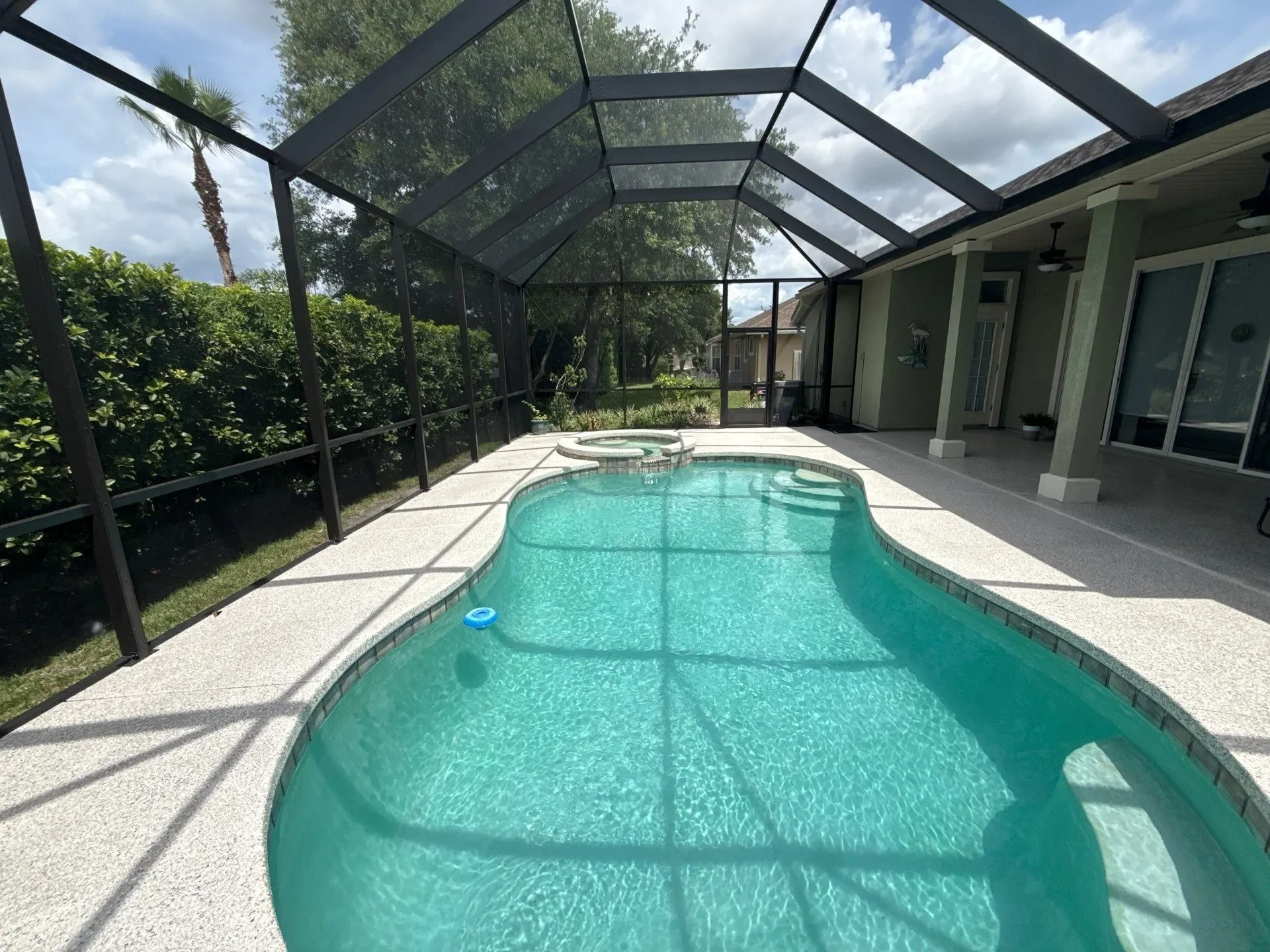
A pool screen enclosure's frame and screens wear out on different timelines. A well-built, well-maintained aluminum frame often lasts for decades, while screens usually need replacing much sooner, and fasteners, doors, and coatings fall somewhere in between. Florida's sun, humidity, salt air, and storms all shorten those timelines.
That's the short answer, but "how long does a pool screen enclosure last" really means two questions. How long until the screens need attention, and how long until the structure itself does? This guide separates the two, breaks lifespan down by component, explains what shortens it in Florida, and helps you decide when to repair, rescreen, or replace.
Lifespan by Component
The frame is aluminum built to carry structural loads. The screen is a mesh under constant sun and wind, and it’s designed to be replaced. Treat them as separate parts with separate schedules.
Frame (posts, beams, rafters): Affected by corrosion, coating condition, storm loads, and installation quality. It’s the longest-lived part, often lasting decades with care. Warning signs: pitting, flaking, white powdery residue, and bent or cracked members.
Screens: Affected by sun, wind, pets, debris, and mesh type. They’re the shortest-lived part and are usually replaced several times over the frame’s life. Warning signs: fading, brittleness, sagging, and tears.
Spline (the cord that holds screen in its channel): Affected by sun and heat. It’s usually replaced along with the screen. Warning signs: cracking, shrinking, and popping out of the channel.
Fasteners and connections: Affected by corrosion, vibration, moisture, and salt. Lifespan varies widely, so they’re worth checking at every inspection. Warning signs: rust streaks, loose heads, and stripped holes.
Doors, hinges, and latches: Affected by daily use, humidity, and alignment. Their lifespan is moderate, since they’re the parts that move. Warning signs: sticking, sagging, and loose or failing latches.
Coatings (paint or powder coat): Affected by sun, salt, and scratches. They wear gradually, and fading usually comes before failure. Warning signs: chalking, peeling, and bare metal showing.
These are general descriptions, not guarantees. A frame installed well and kept clean can outlast one that was neglected by many years, and the same goes for screens in a shaded backyard versus a sunny one.
What Shortens Lifespan in Florida
Florida is hard on outdoor aluminum and mesh. A few factors do most of the damage.
Sun.
Ultraviolet light breaks down screen fibers and splines. Screens fade, grow brittle, and tear more easily. South- and west-facing panels usually wear the fastest.
Humidity and rain.
Constant moisture speeds corrosion where aluminum meets steel fasteners or where water sits, such as post bases and joints.
Salt air.
Near the coast, salt in the air settles on the frame and fasteners and accelerates corrosion. Pools treated with salt systems add another source of salty moisture around the enclosure.
Storms.
Wind, driving rain, and falling limbs stress screens, connections, and anchors. Even a storm that causes no obvious damage can loosen fasteners.
Landscaping.
Trees drop limbs, leaves, and sap on panels. Sprinklers that spray the frame leave mineral deposits and keep metal wet. Plants growing against the cage trap moisture and hold debris.
How Maintenance Extends Life
Most of the difference between an enclosure that ages well and one that doesn't is routine care. The tasks are simple.
Rinse the frame and screens with fresh water, and wash gently with a soft brush and mild soap when dirty.
Keep trees trimmed back and clear leaves and debris off the roof panels.
Aim sprinklers away from the enclosure.
Tighten loose fasteners and replace corroded ones early.
Fix small tears and popped splines before they spread.
Touch up chipped coating where bare metal shows.
Have a professional inspect the structure once a year.
A short routine costs little compared with replacing a corroded frame. Our upcoming maintenance checklist covers these steps in more detail.
Signs You're Near the End of the Line
One worn screen panel doesn't mean the enclosure is finished. Look for patterns.
Widespread screen deterioration. Screens across the whole enclosure are faded, brittle, and tearing.
Corrosion at post bases or connections. Pitting, flaking, or swelling where posts meet the slab or where members join.
Bent, twisted, or cracked frame members. These point to structural damage, not cosmetic wear.
Repeated fastener failures. Screws pull out, strip, or crumble when touched.
Peeling or chalking coating over large areas.
Repair after repair. Each fix is followed by a new problem elsewhere.
If you see signs 2 through 4, don't lean on or climb the frame. Call a professional.
Repair, Rescreen, or Replace: How to Decide
The screens and the frame have to be judged separately.
Repair fits isolated damage such as a torn panel, a loose door latch, or a few corroded fasteners on an otherwise sound structure.
Rescreen fits a sound frame with worn-out screens. It's the most common major job in a screen enclosure's life.
Replace fits a frame with significant corrosion, structural damage, or a design that no longer meets your needs.
The condition of the frame is the deciding factor. Rescreening a corroded frame spends money on screens that sit on a structure that may not last. A professional inspection tells you which category you're in.
Courtesy Screening's Warranty
Courtesy Screening lists a 10-year structural warranty on its screen enclosures. Ask for the written terms with your estimate so you can see exactly what's covered, how a claim works, and whether screens, doors, and normal wear are included.
Book an Inspection
If your screens are tired or you've noticed corrosion, a professional inspection tells you what's worn, what's fine, and what to do next. Book an inspection now or call 1-386-793-2815. You can also learn more about our screen enclosures.
Frequently Asked Questions
How often should pool cage screens be replaced?
There’s no single schedule. Screens in a sunny, exposed yard wear faster than screens in a shaded one, and the mesh type matters too. Replace them when they’re brittle, badly faded, sagging, or tearing in several places, not simply because a number of years has passed. A periodic inspection will tell you where yours stand. Ask your contractor to check the screen condition and the spline (the cord that holds the screen in the frame) at the same visit.
Does coastal air shorten the life of a screen enclosure?
Yes, mostly for the metal parts. Salt accelerates corrosion on fasteners, connections, and coatings, so coastal enclosures benefit from more frequent rinsing and closer inspection. Screens are affected too, but the sun is usually their bigger enemy. If you’re near the water, ask your contractor about corrosion-resistant fasteners and finishes when you get a quote.
Does a warranty cover wear and tear on a screen enclosure?
Most warranties distinguish defects in materials or workmanship from normal wear and tear, and they often treat structure and screens differently. Read yours closely. Courtesy Screening lists a 10-year structural warranty, and the written terms will say what’s included. Before you sign, ask what is covered, for how long, and what you need to do (such as routine cleaning or inspections) to keep the coverage valid.
How can I make my screens last longer?
Rinse them with fresh water and mild soap a few times a year, and avoid pressure washers, which can stretch or tear the mesh. Trim back branches that rub against the screen, and fix small tears before they spread. Regular care helps most in sunny or coastal locations, where wear happens faster.
How do I know if my screens are worn out or just dirty?
Clean a small section first. If the mesh still looks faded or chalky, feels brittle, or tears when pressed lightly, it’s reached the end of its life. If it comes clean and stays flexible, a regular wash may be all it needs. A professional can confirm during an inspection.
