

How a Full Length Screened Lanai Transforms a Florida Backyard
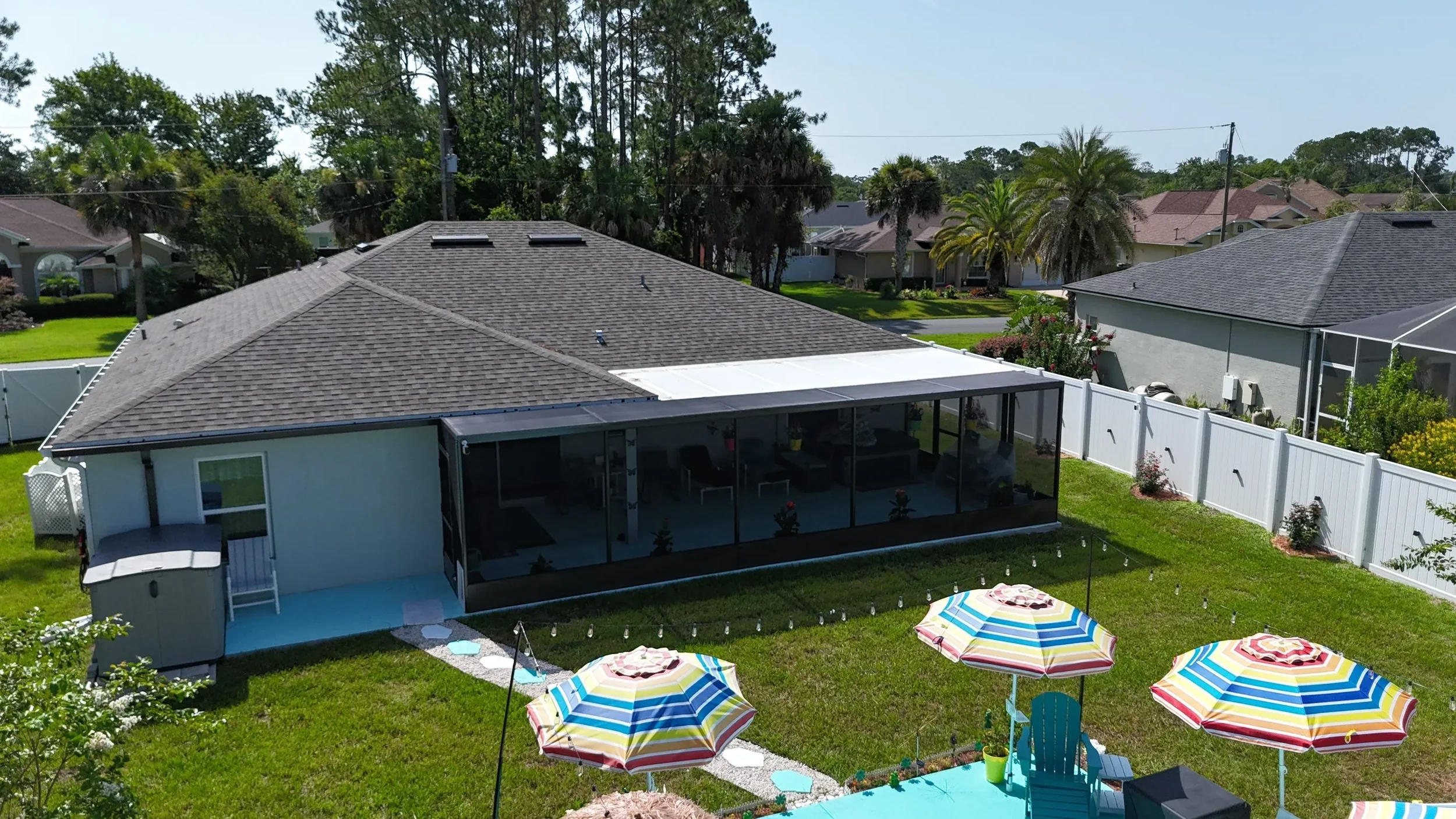
There's a particular kind of Florida backyard that gets noticed. String lights along the fence line, a pool with a couple of striped umbrellas nearby, and a screened lanai running the full length of the house, tying the whole space together. That last piece often makes the biggest difference, and it's easy to see why once you understand what it actually adds to a home.
If you're picturing a similar transformation for your own backyard in Palm Coast, Flagler County, or Bunnell, here's a closer look at what a full length screened lanai does for a home, what goes into building one, and what to expect from the process.
What Makes a Full Length Lanai Different
A lot of homeowners start with a smaller screened patio, just enough to cover a table and a couple of chairs near the back door. A full length lanai takes a different approach. Instead of covering a section of the patio, it extends across the entire back of the home, connecting the living space to the yard in a much more complete way.
Walk out from nearly any room along the back of the house, and you're stepping into the same shaded, screened space rather than a small enclosed corner. That single design choice changes how the whole backyard feels and functions.
The Practical Benefits
More Usable Outdoor Living Space
The most obvious benefit is simply more room to live outside. A full length lanai can comfortably hold a seating area, a dining set, and still leave open space for movement, something a smaller enclosure often can't manage. For homeowners who entertain, host family gatherings, or just want somewhere to unwind that isn't the couch, that extra square footage gets used constantly.
A Direct Connection to the Pool and Yard
When a lanai runs the length of the home, it typically overlooks the pool and backyard rather than being tucked into a single corner. That means whoever is inside the lanai, cooking, reading, watching the kids, still has a clear view of the pool and yard beyond the screen. It keeps the indoor, lanai, and outdoor spaces feeling like one continuous area instead of three separate zones.
Protection Without Losing the Outdoors
Florida weather is a big part of why these additions are so popular. A full length screened lanai keeps mosquitoes, no see ums, and windblown debris out while still letting in natural light and airflow. Compared to a small patio umbrella setup, it offers a much more consistent, comfortable outdoor experience across most of the year, including the hotter, buggier months when an open patio just isn't pleasant to sit on.
Added Home Value
Real estate agents in Florida consistently point to enclosed outdoor living space as a feature buyers actively look for. A lanai that spans the back of the home reads as a real extension of the living area, not just an add on, which tends to make it a stronger selling point than a smaller, disconnected screen room.
What Goes Into Building One
Extending a lanai across the full length of a home is a bigger undertaking than a standard patio screen, and a few factors shape how the project comes together.
Roofline and structural tie in. Because the enclosure spans the entire back wall, it typically ties into the home's existing roofline at multiple points rather than a single section. This requires careful planning to make sure the structure is properly supported and integrated with the home rather than just attached to it.
Aluminum framing sized for the span. Longer structures need framing designed to handle the additional length without sagging or flexing. A contractor familiar with Florida wind load requirements will size the framing components specifically for the dimensions of your home.
Screen and mesh selection. Homeowners often choose tinted or heavier gauge screens for a full length lanai, both for a cleaner, more finished look and for added durability across such a large surface area. Some also opt for a solid roof section, sometimes called an elite room upgrade, over the portion of the lanai closest to the house for extra shade and weather protection.
Coordination with existing features. If your home already has a covered patio, French doors, or a pool deck, the lanai design needs to work around those existing elements rather than against them, which is part of why an experienced contractor's input matters early in the planning stage.
What to Expect From the Process
Every property is a little different, but a full length lanai project generally follows a similar path. It starts with a walkthrough of the home to measure the span, review the roofline, and talk through how you plan to use the space. From there, a design is put together along with an estimate, followed by permitting, since a structure of this size falls under the same building code requirements as any other permanent addition.
Once permitting is complete, installation typically takes a matter of days to a couple of weeks depending on the length and complexity of the structure, weather permitting. A final walkthrough closes out the project to confirm everything was built to the approved design.
Is a Full Length Lanai Right for Your Home?
Not every home needs an enclosure spanning the entire back wall. If your outdoor use is limited to a small seating area, a standard patio screen room may be all you need. But if your backyard includes a pool, an outdoor kitchen, multiple entry points along the back of the house, or you simply want the space to feel like one continuous living area rather than separate outdoor zones, a full length lanai is often the better long term fit.
It also helps to think about how your household actually uses the yard throughout the year. Homes that regularly host gatherings, have kids or pets moving between the house and pool, or simply spend a lot of time outside tend to get the most value from a lanai that covers the entire back of the home rather than a single corner. On the other hand, a smaller enclosure can still make sense for a more modest backyard or a lower budget, and it's always possible to expand later if your needs change.
Maintaining a Full Length Lanai Over Time
Once built, a full length lanai doesn't require much upkeep to stay in good shape. Aluminum framing holds up well against Florida's humidity and doesn't need painting or sealing. Periodically rinsing the screen and frame with a hose helps prevent buildup of pollen, salt air residue, and general grime, especially for homes closer to the coast. It's also worth doing a quick visual check after major storms to look for loose fasteners or stretched screen panels, the same way you would with any other screened structure on the property.
Ready to Extend Your Outdoor Living Space?
If you're picturing your own backyard with a lanai stretching across the back of the home, Courtesy can walk you through what that would look like for your specific property. Explore our screen enclosure services or reach out today to schedule a consultation and get a real design and estimate for your home.
Frequently Asked Questions
How much longer does a full length lanai take to build compared to a smaller screen room?
It depends on the size and complexity, but a larger structure generally adds extra days to the installation timeline compared to a compact patio enclosure, mainly due to the additional framing and tie-in points required.
Does a full length lanai require a different type of permit?
It falls under the same general permitting process as other screen enclosures, though the engineering documentation will reflect the larger scale of the structure.
Can a full length lanai be added to a home that already has a smaller screened patio?
In many cases, yes. An existing patio screen can often be extended or rebuilt as part of a larger lanai project, though this depends on the current structure and how it was originally built.
Will a full length lanai work with an existing pool cage?
Often, yes. Many homeowners connect a lanai addition directly to an existing pool cage so the two structures function as one continuous enclosed space.
What's the biggest factor in the cost of a full length lanai?
Overall length and roofline complexity tend to have the biggest impact on cost, along with the screen or panel type chosen for the walls.
